You can see the gap in corridors, classrooms, and playground conversations—children and young people are struggling earlier, and support can feel hard to access until things escalate.
If you're a school leader, SENCo, or wellbeing lead in a primary or secondary setting, you’ve probably heard: “they don’t meet the CAMHS threshold.” So what now?
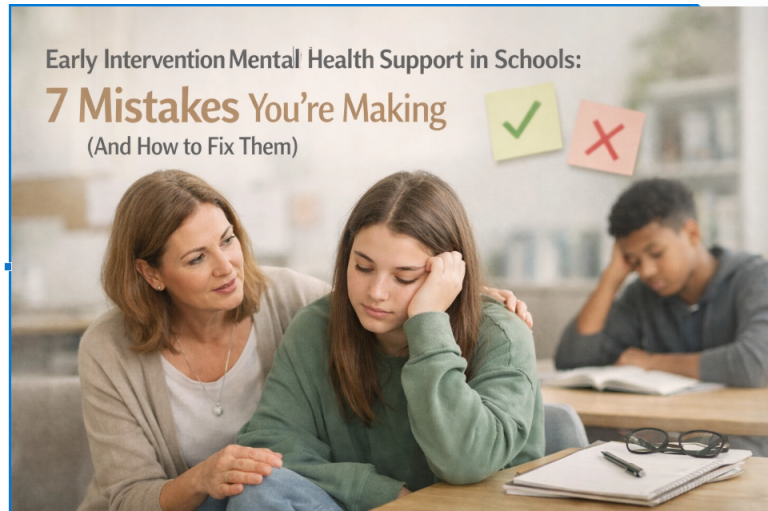
Early intervention mental health support in schools is essential—but even with good intentions, it’s easy to fall into common traps. Here are 7 mistakes we see most often (and what to do instead).
Mistake #1: Waiting for a Crisis Before Acting (The CAMHS Threshold Trap)
CAMHS thresholds are high and waiting lists are long. If you only act at crisis point, children and young people may already be struggling to cope in school.
The fix: Treat early intervention as everyday provision in primary and secondary schools—build skills early through resilience coaching in schools so pupils learn emotional regulation, confidence, and coping strategies before difficulties escalate. This supports children before CAMHS—it doesn’t replace clinical services.
Mistake #2: Only Supporting 'High-Risk' Students
Focusing only on pupils in visible distress can mean missing the quieter struggles—low-level anxiety, friendship issues, or reduced confidence that still affect learning.
The fix: Pair targeted support with a whole-child approach. Use emotional wellbeing workshops for schools (primary and secondary) to normalise feelings, teach emotional intelligence, and give more pupils practical tools before challenges grow.
Mistake #3: Overlooking Transition Stages (Especially Year 6 to 7)
Transitions can be a tipping point—EYFS to KS1, moving into upper KS2, and especially Year 6 to Year 7.
The fix: Build emotional readiness alongside practical prep. Use structured group sessions in Year 6 (and follow-ups in early Year 7) to help children and young people name worries, practise coping strategies, and feel more confident about change.
Mistake #4: Using Generic Interventions Without Trauma-Informed Approaches
A one-size-fits-all approach can miss what’s really going on—especially for pupils affected by trauma (including bereavement, family breakdown, neglect, or abuse).
The fix: Make trauma informed coaching for children part of your plan. Create safety, offer choice and control, and respond to dysregulation with compassion. Trauma-informed resilience work supports pupils across primary and secondary settings—without forcing disclosure or “digging into” the past.
Mistake #5: Inconsistent or Ad-Hoc Delivery
Stop-start support doesn’t build momentum—and it can knock trust.
The fix: Protect time for structured 1:1 and group sessions with a clear plan, consistent scheduling, and regular attendance. Whether delivered in-house or with partners like REACH Support Services, consistency helps children and young people feel safe enough to practise new skills.
Mistake #6: Not Involving the Wider School Community
Support sticks best when the adults around the child are aligned. If wellbeing work sits with a few staff, impact stays limited.
The fix: Use interactive workshops to bring staff, parents/carers, and pupils together—shared language, simple strategies, and a whole-school culture that works in primary and secondary settings.
Mistake #7: Measuring Success Solely on Academic Outcomes
Attendance and attainment matter—but they don’t show the full picture of progress.
The fix: Track wellbeing outcomes too: emotional intelligence and regulation, confidence, relationships, and help-seeking. Use pupil voice and simple wellbeing measures alongside data—especially across key stages in both primary and secondary schools.
Building a Sustainable Approach to Early Intervention
Early intervention works best when it’s proactive, consistent, trauma-informed, and part of everyday school life. Avoid these seven mistakes and you create stronger foundations—so children and young people can regulate emotions, build resilience, and access the right support at the right time.
At REACH Support Services, our 1:1 resilience coaching, interactive workshops, and structured group sessions are built for primary and secondary settings.
Ready to strengthen your early intervention approach? Get in touch and let’s support your school community.